

What OpenAI launched
On 10 November 2026, OpenAI launched Businesses in ChatGPT, in beta — the clearest sign yet that AI assistants are becoming a discovery channel, a place people go to find, compare and choose businesses. AI visibility — being accurately found, understood and represented in those answers — is now a practical concern for businesses and the agencies that advise them. Claiming a profile helps you manage your details in ChatGPT; it does not, on its own, get you into the answers people see.
Businesses in ChatGPT gives companies a way to manage how they are represented inside ChatGPT. OpenAI says ChatGPT is used by 1.2 billion people each week. As of November 2026 the feature is in beta, with three parts.
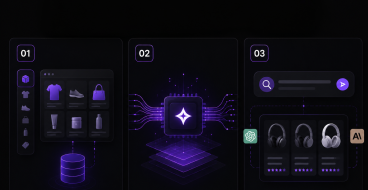
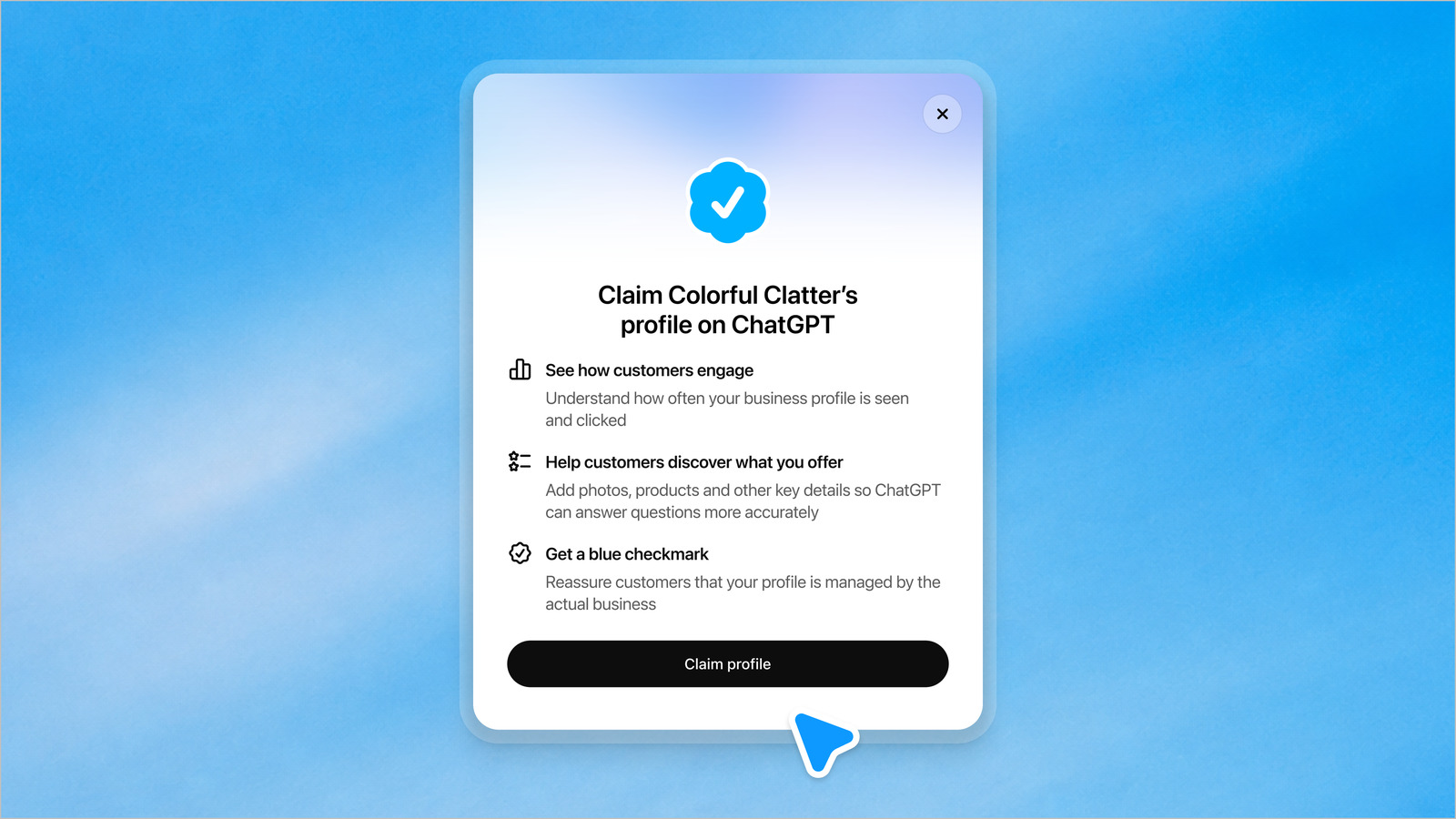
Business Hub is where eligible businesses can claim a profile, verify ownership, update key details and, for retailers, add a product feed with prices and availability.
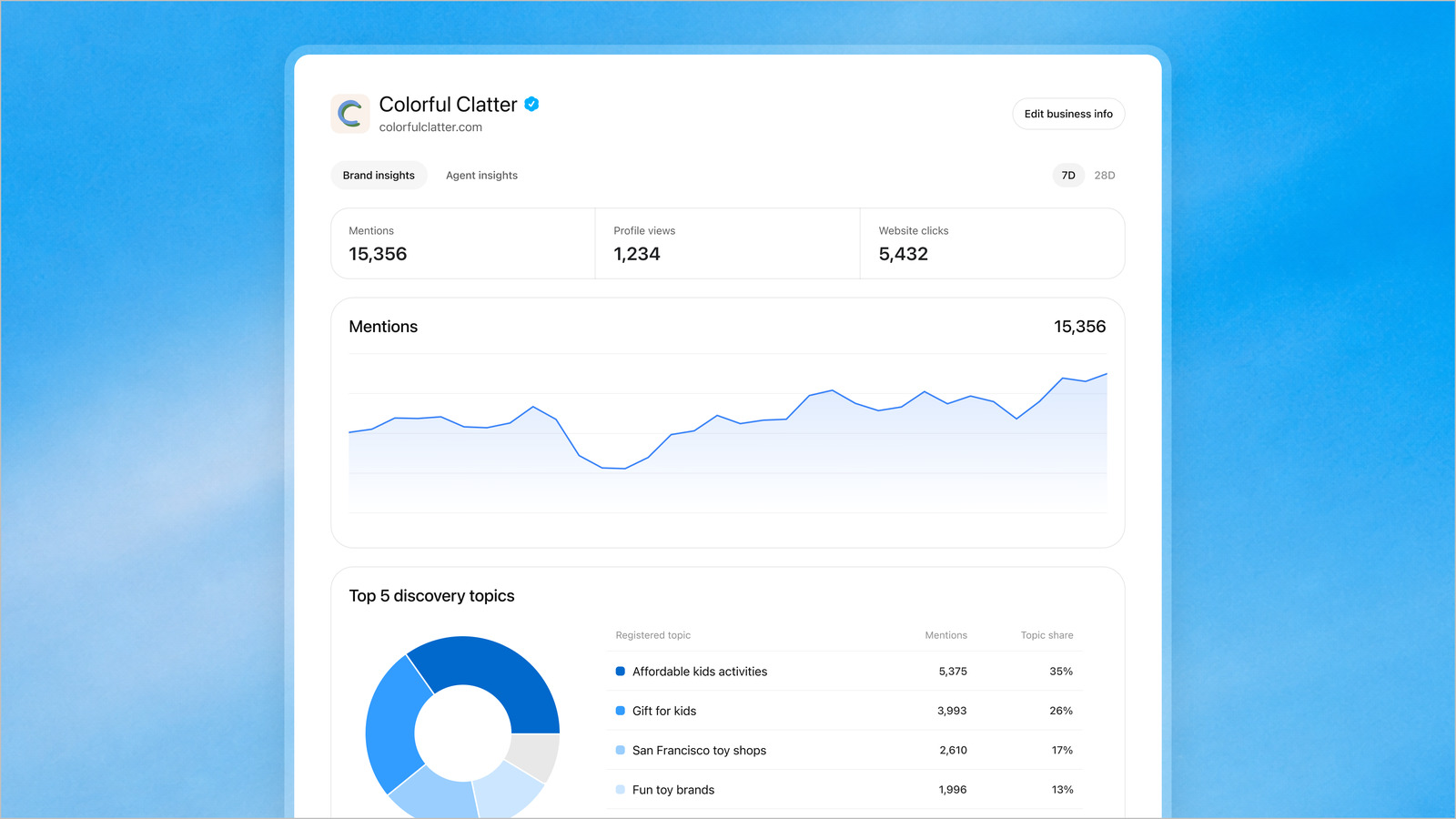
Insights gives aggregated figures on mentions, website clicks, and discovery topics — the themes in conversations where the site is cited. OpenAI does not share individual conversations, and figures only appear above certain privacy thresholds. A blank metric does not necessarily mean there has been no activity.
Business Agents are an optional, clearly labelled chat about a company's products and policies, currently for eligible ecommerce and online service businesses in the United States. Businesses can sponsor their agent through ChatGPT Ads. Sponsored placements are labelled and kept separate from ChatGPT's own answers.
You do not need a ChatGPT Ads account or a ChatGPT Enterprise agreement to claim. Eligibility depends on industry, location and OpenAI's verification checks, and claiming is initially for eligible businesses with a website. Local stores and restaurants can currently claim only an existing US listing.
Why this marks a shift
For years, "being found" mostly meant ranking in Google. A person can now ask ChatGPT, Perplexity or Gemini a question and receive a single, synthesised answer, with a handful of names and sources, rather than a page of links. If your business is not in that answer — or is described inaccurately — the searcher may never visit your site to correct the impression.
OpenAI building a dashboard for this is the point. Measuring mentions, clicks and citation topics treats ChatGPT as a place people discover businesses, not only as a chat box. The 1.2 billion weekly users is OpenAI's own figure; the direction is what matters.
Paid placements make the organic side more important, not less. Business Agents can already be sponsored through ChatGPT Ads, and OpenAI is clear that advertising does not influence ChatGPT's independent answers. That is not a reason to treat a claimed profile as a ranking lever. It is a reason for SEO consultants, agencies and in-house teams to help clients tell the difference between having a profile and being represented accurately in the answers themselves.
What AI visibility actually means
AI visibility is not a single score, and it is not the same as a Google ranking. In practice it comes down to four questions, which are also how we look at a website in a CiteReady audit.
Can AI find you? Are your important pages crawlable, in a sitemap, and not accidentally blocked?
Can AI understand you? Is it clear what you do, who you serve and what each page is about, in plain language near the top?
Can AI trust you? Are your business details consistent, is it obvious who stands behind the site, and do your pages look current and genuine?
Do you cover what people ask? Do you actually answer the questions customers put to an AI assistant, or only describe yourself in marketing language?
Two words get used loosely. Mentioned usually means your business is named in an answer. Cited usually means your site is used as a source. Those two things can happen separately.
OpenAI uses "mention" more strictly: for an online business, a mention counts when ChatGPT references the website, not when the brand is named alone. For a local business, it counts when ChatGPT shows a result for that location. Discovery topics group themes from answers that mentioned or cited the business; they are not real customer prompts.
A claimed profile is one input. Your website is still the foundation. ChatGPT continues to draw on other sources, and OpenAI says claiming does not guarantee higher placement or sales.
What businesses and agencies should do now
You do not need to wait for every market and category to open.
1. Claim your ChatGPT profile where you are eligible. The business should own the claim. The admin can then add teammates and give an agency access from Business Hub. Each person should use their own ChatGPT account; do not forward personal claim invitations. Each brand is managed separately, and claiming a main brand does not claim its locations.
2. Make your business details consistent. Use the same name, address, phone, email and website on your homepage, contact and about pages, and in your structured data — the code that describes your business to search engines and AI tools (Organization, or LocalBusiness for local firms). If the profile and the website disagree, you have created a mismatch.
3. Keep key pages crawlable. Check that robots.txt is not blocking important pages or AI crawlers, that your sitemap works, and that the main content sits in the HTML rather than only behind JavaScript.
4. Write clear service and product pages. One page per core offering, with a short answer near the top. Online shops should keep prices and availability accurate on the page, in structured data, and in any product feed they upload to Business Hub.
5. Answer the questions people actually ask. Add FAQs in plain language, based on real sales and support questions, not invented keyword lists.
6. Watch the answers, not only the profile. Business Hub insights cover ChatGPT and your own business, above a privacy threshold. They will not show competitors, other AI assistants, or what to fix on your site. Check how ChatGPT, Perplexity and Gemini answer the questions your customers actually ask.
A CiteReady audit is one way to work through the website side of this. It looks at your site under those four questions, and tracks whether your business shows up in answers from ChatGPT, Perplexity and Gemini for questions you choose. It does not claim your ChatGPT profile, and it does not promise mentions, citations or traffic.
How to claim your business, in brief
OpenAI's help article, Setting up your business on ChatGPT, is the authoritative walkthrough. In outline: sign in and open Business Hub from the sidebar; search for your business and select the matching listing; verify by business phone, business email, a DNS record on your website's domain, or Shopify; wait for OpenAI's review; then complete identity verification with Persona. You need the identity check before you can publish changes, connect a product feed, view insights or create a Business Agent. If you run an eligible online business and cannot find a listing, you may see an option to add it. Local stores and restaurants can currently claim only an existing US listing.
A note on the blue check. OpenAI's pages describe this slightly differently. The Businesses in ChatGPT page says a blue check appears on the profile once the business has been claimed. The help centre says claiming alone does not give the profile a verified badge, and that the blue check appears after Persona verification is approved. Plan on completing both steps, and do not treat the badge as a promise of visibility.
What claiming a profile does not do
It does not guarantee mentions, citations, higher placement or sales. OpenAI says so directly, and says advertising does not influence ChatGPT's independent answers.
It is not available to everyone yet. The feature is in beta. Eligibility depends on industry, location and verification. Local stores and restaurants can currently claim only an existing US listing. Business Agents are currently limited to eligible US ecommerce and online service businesses.
It covers ChatGPT only, and only your own business. You will not see competitors, other AI assistants, or a diagnosis of your website.
It does not fix your website. ChatGPT still reads the wider web, including your own pages. Updates in Business Hub are reviewed by OpenAI, can take time to appear, and may sit alongside other sources.


